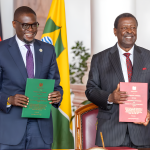
Deputy President Kithure Kindiki convened a pivotal Cabinet Committee meeting at his official residence in Karen, Nairobi, marking a significant step in advancing Kenya’s governance, social sector, and public administration reforms. The meeting, attended by key Cabinet Secretaries and senior government officials, focused on aligning legislative, policy, and programmatic proposals to drive inclusive and efficient service delivery across the nation.

As Kenya navigates a transformative phase under the Kenya Kwanza administration, Kindiki’s leadership in this committee signals a renewed commitment to addressing pressing national challenges and fostering sustainable development.
A New Chapter in Karen: Kindiki’s Leadership
The Karen residence, the official home of Kenya’s Deputy President, has become a hub for high-level government discussions since Kithure Kindiki assumed office on November 1, 2024, following the impeachment of his predecessor, Rigathi Gachagua. The residence, previously renovated at a cost of Ksh660 million under Gachagua’s tenure, has hosted multiple strategic meetings under Kindiki’s stewardship, underscoring its role as a center for policy formulation and governance. The July 22 meeting of the Cabinet Committee on Governance, Social Sector, and Public Administration was a testament to Kindiki’s proactive approach to leadership, as he seeks to translate the government’s vision into actionable outcomes.
The meeting was attended by prominent Cabinet Secretaries, including John Mbadi (National Treasury and Economic Planning), Julius Migos Ogamba (Education), Eric Muriithi Mugaa (Water, Irrigation, and Sanitation), and Alfred Mutua (Labour and Social Protection), among others. Posts on X from attendees, such as @Waziri_Mvurya and @JohnMbadiN, highlighted the focus on reviewing progress and strategizing for effective governance, emphasizing stronger inter-agency collaboration and policy alignment to achieve impactful development.
Focus on Reforms: Governance, Social Sector, and Public Administration
The core agenda of the Karen meeting was to deliberate on proposed legislative, policy, and programmatic initiatives aimed at transforming Kenya’s governance framework. The discussions centered on several key pillars of national development, including macroeconomic stability, infrastructure development, affordable housing, job creation, and reforms in education and health sectors. These areas align with the Kenya Kwanza administration’s Bottom-Up Economic Transformation Agenda, which seeks to prioritize grassroots development and economic inclusivity.

Kindiki, a former law professor and Cabinet Secretary for Interior and National Administration, brings a wealth of experience to these discussions. His tenure as Interior CS was marked by significant achievements, such as streamlining e-passport issuance, modernizing police equipment, and implementing recommendations from the Maraga Taskforce on police reforms. These accomplishments have positioned him as a capable leader to steer the committee’s reform agenda.
One of the standout topics was the push for enhanced governance and public administration. The committee reviewed strategies to improve service delivery, emphasizing accountability and efficiency. According to Interior CS Kipchumba Mukomen, who attended a similar meeting in May 2025, the government is committed to building a “resilient, accountable, and prosperous Kenya for all.” This sentiment was echoed in the July meeting, where the focus was on aligning policies across ministries to ensure cohesive implementation of government programs.
Economic and Social Priorities
The meeting also addressed critical economic challenges, such as stabilizing the cost of living and fostering job creation. Kindiki has previously highlighted the government’s success in reducing inflation to 2.7%, the lowest in 17 years, attributing it to effective economic policies and strategic interventions. The committee discussed sustaining this progress through initiatives like the establishment of 1,450 Digital Hubs across all wards to enable youth to access digital job opportunities, such as content creation and software development.

The labour mobility programme, another key focus, has already secured jobs for over 200,000 Kenyans abroad, with plans to place over a million more through bilateral trade agreements and a national skills inventory. This initiative reflects the government’s commitment to leveraging global opportunities to address unemployment, particularly among the youth. Additionally, the Affordable Housing project, discussed in a previous meeting chaired by Kindiki on December 18, 2024, remains a cornerstone of the administration’s efforts to ensure Kenyans can own homes at affordable rates.
Education and health reforms were also high on the agenda. The committee reviewed plans to construct 32,000 classrooms by the end of 2025 to improve access to education, alongside the rollout of Universal Health Coverage (Taifa Care) to enhance healthcare accessibility. These initiatives are part of a broader strategy to address systemic inequalities and improve the quality of life for Kenyans.
Political Context and Challenges
Kindiki’s leadership comes at a time of significant political transition. His appointment as Deputy President followed the controversial impeachment of Rigathi Gachagua, who faced 11 charges, including gross misconduct and undermining the president. The impeachment, supported by 282 Members of Parliament, marked a turning point in Kenya’s political landscape, with Kindiki stepping into a role that required him to navigate complex dynamics within the ruling United Democratic Alliance (UDA) and the broader government.
The Karen meeting also occurred against the backdrop of public pressure for reforms, particularly in response to incidents of police brutality and extrajudicial killings. A Cabinet retreat chaired by President William Ruto in June 2025 highlighted the need to address these issues while advancing the Bottom-Up Economic Transformation Agenda. Kindiki’s role in implementing police reforms, stemming from his time as Interior CS, positions him as a key figure in addressing these concerns. The National Steering Committee on police reforms, appointed by Kindiki, includes senior officials and is tasked with implementing recommendations from the Maraga Taskforce.
However, Kindiki’s tenure has not been without challenges. A petition filed on November 7, 2024, questioned the legality of his appointment, arguing that he remained Interior CS due to the absence of a gazette notice announcing his resignation. The petition also challenged the appointment of Musalia Mudavadi as acting Interior CS. While the Nairobi High Court overturned a stay on Kindiki’s swearing-in, allowing him to assume office, these legal battles underscore the contentious nature of his transition to Deputy President.
Kindiki’s Vision and Grassroots Mobilization
Beyond policy discussions, Kindiki has been actively engaging with grassroots leaders to mobilize support for the government’s development agenda. In January 2025, he hosted delegations from Nakuru, Tharaka Nithi, and Isiolo counties at his Karen residence, emphasizing inclusive development and dismissing divisive rhetoric from his predecessor. His sharp criticism of Gachagua’s claim that President Ruto would serve only one term reflects his commitment to defending the administration’s legacy and vision for Kenya’s transformation by 2027.

Kindiki’s academic and professional background as a distinguished law professor and former Senator for Tharaka Nithi County adds depth to his leadership. His extensive experience with international organizations, including the World Trade Organization and the United Nations, equips him to address both domestic and global challenges. His ability to bridge policy formulation with practical implementation has been evident in his chairing of meetings like the 26th Ordinary Session of the Intergovernmental Budget and Economic Council (IBEC), where he urged counties to set realistic revenue targets to avoid financial setbacks.
Public Sentiment and Media Coverage
The Karen meeting garnered significant attention on X, with posts from accounts like @Kenyans and @citizentvkenya highlighting its importance as a “mega policy push” for governance and public administration reforms. The sentiment on X reflects optimism about the government’s commitment to transformative policies, though some users expressed skepticism about the pace and impact of these reforms, given the challenges inherited by the Kenya Kwanza administration.
Media outlets, including The Star and Capital News, have extensively covered Kindiki’s activities at Karen, framing them as a continuation of his efforts to drive systemic change. The focus on service delivery and inter-agency collaboration has been praised as a step toward addressing longstanding inefficiencies in Kenya’s public sector.
Looking Ahead: A Transformative Agenda
As Kindiki continues to chair critical meetings at his Karen residence, his role as Deputy President is increasingly defined by his ability to translate policy discussions into tangible outcomes. The July 22 meeting underscores the government’s commitment to addressing economic, social, and governance challenges through a coordinated翁coordinated and inclusive approach. With plans to enhance digital infrastructure, expand affordable housing, and reform public services, the Kenya Kwanza administration aims to lay the foundation for a prosperous and equitable Kenya by 2027.
However, the success of these reforms will depend on overcoming political and logistical hurdles, including public skepticism and legal challenges. Kindiki’s leadership, characterized by strategic vision and grassroots engagement, will be crucial in navigating these complexities. As he continues to spearhead the Cabinet Committee on Governance, Social Sector, and Public Administration, Kindiki’s ability to foster collaboration and drive implementation will shape Kenya’s path toward sustainable development.
In conclusion, the Karen meeting on July 22, 2025, marks a pivotal moment in Kenya’s reform journey. Under Deputy President Kithure Kindiki’s leadership, the government is poised to advance its transformative agenda, addressing critical issues like unemployment, housing, and governance. As Kenya looks toward the 2027 general election, Kindiki’s role in mobilizing support and implementing policies will be instrumental in realizing the Kenya Kwanza vision of a resilient and prosperous nation.