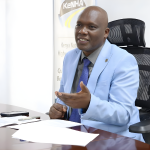
Juja Member of Parliament (MP) George Koimburi appeared before the Milimani Law Courts in Nairobi, Kenya, to face charges related to allegedly staging his own abduction. The incident, which captured national attention in May 2025, has sparked intense debate, with allegations of political motivations and legal maneuvering. Koimburi, a vocal ally of former Deputy President Rigathi Gachagua, was released on a KSh 300,000 cash bail after pleading not guilty to charges of conspiracy to defeat justice, publishing false information, and staging his abduction.
Background of the Alleged Abduction
The controversy surrounding George Koimburi began on May 25, 2025, when reports surfaced that the Juja MP had been abducted after attending a church service in the Mugutha area of Juja Sub-County, Kiambu County. According to initial claims, Koimburi was seized by masked men, bundled into a Subaru Forester, and later found unconscious in a coffee plantation in Kibichoi, Githunguri Sub-County, on May 26, 2025. His wife, Ann Koimburi, reported that she was thrown out of the vehicle during the incident, and former Deputy President Rigathi Gachagua, who visited Koimburi at Karen Hospital, alleged that the MP had been tortured by professionals, suffering soft tissue injuries and chemical exposure that impaired his speech.
However, the National Police Service (NPS) and the Directorate of Criminal Investigations (DCI) quickly dismissed these claims, asserting that Koimburi had staged the abduction to evade arrest in a separate land fraud case. The Office of the Director of Public Prosecutions (ODPP) alleged that the MP, along with six co-accused individuals, orchestrated the incident to obstruct justice and prevent his arraignment at the Kiambu Law Courts, where he faced four counts related to land fraud. The prosecution pointed to inconsistencies in the abduction narrative, including CCTV footage linking a suspect’s car to the incident and Koimburi’s presence at a Kiganjo entertainment spot with one of the accused the night before.
Legal Proceedings and Charges
Koimburi’s court appearance on July 23, 2025, followed a warrant issued on July 16, 2025, after he and two co-accused, Peter Kiratu and a man identified as Njuguna alias Njugush, failed to appear for plea-taking. Four other suspects—Kanyenya-ini Ward MCA Grace Nduta Wairimu, Peter Kiratu Mbari, David Macharia Gatana, and Cyrus Muhia—had previously been arraigned and released on KSh 300,000 bail each. During the July 23 hearing before Milimani Principal Magistrate Benmark Ekhubi, Koimburi pleaded not guilty to three charges: conspiracy to defeat justice under Section 117(c) of the Penal Code, publishing false information under Section 23 of the Computer Misuse and Cyber Crimes Act, and giving false information to a public officer.
The prosecution, led by State Prosecutor Victor Owiti, alleged that Koimburi’s YouTube press statement on June 7, 2025, from Karen Hospital, claiming he had been abducted and tortured, was false and intended to cause public panic. Additionally, co-accused Peter Kiratu Muhia faced charges for filing a false police report at Mugutha Police Station, claiming Koimburi had been kidnapped by masked men. The report, recorded under OB number 21 by Constable Nelly Kabuu, was later deemed fabricated. Magistrate Ekhubi granted Koimburi a KSh 300,000 cash bail, consistent with the terms for his co-accused, and ordered him to provide three contact persons to ensure his attendance at trial. The court also directed Koimburi to report for fingerprinting on July 25, 2025, with the case scheduled for mention on August 5, 2025, for pre-trial directions.
Political Context and Allegations
The Koimburi case has unfolded against a backdrop of heightened political tensions in Kenya, particularly following the impeachment of former Deputy President Rigathi Gachagua in October 2024. Koimburi, a known ally of Gachagua, has been vocal in his criticism of the Kenya Kwanza government, aligning himself with the Democracy for Citizens’ Party. Gachagua and other opposition figures, including Kalonzo Musyoka, have accused the government of orchestrating a wave of abductions to intimidate political opponents, citing Koimburi’s case as part of a broader pattern of harassment. Gachagua’s claims of professional torture and chemical exposure during Koimburi’s hospitalization fueled public outrage, with social media posts amplifying demands for accountability.
Conversely, the NPS and DCI have maintained that Koimburi’s alleged abduction was a calculated ploy to garner public sympathy and delay his prosecution in the land fraud case. Police investigations revealed discrepancies, such as mismatched terrain between the alleged crime scene and video footage, and statements from the coffee plantation caretaker, Moses Kariuki, who denied witnessing any incident. The DCI also noted that Koimburi’s family blocked investigators from taking his statement at Karen Hospital, further raising suspicions of a staged event.
Broader Context of Abductions in Kenya
Koimburi’s case occurs amidst growing concerns over abductions in Kenya, particularly since the 2024 protests against tax hikes, which posed a significant challenge to President William Ruto’s administration. The Kenya National Commission on Human Rights reported over 80 abductions since June 2024, with many linked to political activism. The assassination of MP Charles Ong’ondo Were in February 2025 and Koimburi’s earlier arrest for forging academic credentials have heightened fears of targeted attacks on opposition figures. These incidents have fueled public discourse on social media, with posts reflecting alarm over deteriorating security and allegations of state-sponsored intimidation.
The government has consistently denied involvement in these abductions, with NPS spokesperson Michael Muchiri asserting that Koimburi would have been summoned formally if he were wanted for arrest. However, the timing of Koimburi’s alleged abduction—days before his scheduled court appearance for land fraud—has led to speculation about political motivations on both sides. Critics argue that the government’s narrative of a staged abduction may be an attempt to discredit Koimburi, while supporters of the MP claim he is a victim of state harassment due to his association with Gachagua.
Implications and Public Reaction
The Koimburi case has significant implications for Kenya’s political and legal landscape. Legally, it underscores the challenges of prosecuting high-profile figures while maintaining public trust in the judicial process. The ODPP’s decision to charge Koimburi and his co-accused with conspiracy and false information highlights the government’s intent to crack down on actions perceived to undermine justice. However, the lack of concrete evidence supporting either the abduction or the staging allegations has left room for speculation, complicating the case’s resolution.
Public reaction, as seen on platforms like X, reflects a polarized sentiment. Some users, such as @itskipronoh, condemned the government’s silence and alleged rogue behavior, while others, including @C_NyaKundiH, highlighted police claims that Koimburi’s abduction was staged, with his own associates implicated. The recovery of a Subaru Forester linked to Cyrus Kieru Muhia, a close ally of Koimburi, and CCTV evidence placing the MP with co-accused Grace Nduta further fueled skepticism about his claims. These developments have intensified debates about political accountability and the role of security agencies in handling high-profile cases.
Challenges and Future Outlook
The Koimburi case presents several challenges for Kenya’s judicial and political systems. The prosecution must substantiate claims of a staged abduction with compelling evidence, such as CCTV footage and witness testimonies, to counter defense arguments of political persecution. Koimburi’s health, described as frail during his court appearance, may also complicate proceedings, as his medical condition could delay hearings. Additionally, the case’s political undertones risk further polarizing public opinion, particularly in Kiambu County, where Koimburi enjoys significant support.
Looking ahead, the August 5, 2025, pre-trial hearing will be critical in determining the case’s trajectory. The court’s ability to balance the rights of the accused with the need for justice will be closely watched, especially given the involvement of multiple suspects and the high-profile nature of the case. For Koimburi, maintaining his political credibility while navigating these legal battles will be a delicate task, particularly as he faces separate charges of land fraud and forging academic credentials.
The release of Juja MP George Koimburi on a KSh 300,000 bail on July 23, 2025, marks a significant development in a case that has gripped Kenya’s political and social spheres. The allegations of a staged abduction, coupled with claims of political persecution, highlight the complexities of justice in a polarized environment. As the case progresses, it will test the resilience of Kenya’s legal institutions and the public’s trust in their ability to deliver impartial justice. Whether Koimburi’s ordeal was a genuine abduction or a calculated ploy remains to be seen, but its resolution will undoubtedly shape the narrative around political accountability and security in Kenya.